Table of Content
This left Prussia free to form the North German Confederation the next year, incorporating all the German states north of the Main River. Prussia chose not to seek Austrian territory for itself, and this made it possible for Prussia and Austria to ally in the future, since Austria felt threatened more by Italian and Pan-Slavic irredentism than by Prussia. The war left Prussia dominant in German politics , and German nationalism would encourage the remaining independent states to ally with Prussia in the Franco-Prussian War in 1870, and then to accede to the crowning of King William of Prussia as German Emperor in 1871. The united German states would become one of the most influential of all the European powers. The first war between two major continental powers in seven years, it used many of the same technologies as the Second Italian War of Independence, including railways to concentrate troops during mobilization and telegraphs to enhance long-distance communication. The Prussian Army used von Dreyse's breech-loading needle gun, which could be rapidly loaded while the soldier was seeking cover on the ground, whereas the Austrian muzzle-loading rifles could be loaded only slowly, and generally from a standing position.
Prussian Chief of General Staff Helmuth von Moltke had planned meticulously for the war. He rapidly mobilized the Prussian army and advanced across the border into Saxony and Bohemia, where the Austrian army was concentrating for an invasion of Silesia. There, the Prussian armies, led nominally by King William I, converged, and the two sides met at the Battle of Königgrätz (Hradec Králové) on 3 July. The Prussian Elbe Army advanced on the Austrian left wing, and the First Army on the center, prematurely; they risked being counter-flanked on their own left. Victory therefore depended on the timely arrival of the Second Army on the left wing. This was achieved through the brilliant work of its Chief of Staff, Leonhard Graf von Blumenthal.
Course of the war
The Bavarian fortress of Würzburg was shelled by Prussian artillery, but the garrison defended its position until armistice day. Most of the northern German states joined Prussia, in particular Oldenburg, Mecklenburg-Schwerin, Mecklenburg-Strelitz, and Brunswick. The Kingdom of Italy participated in the war with Prussia, because Austria held Venetia and other smaller territories wanted by Italy to further the process of Italian unification. In return for Italian aid against Austria, Bismarck agreed not to make a separate peace until Italy had obtained Venetia.
Possible evidence can be found in Bismarck's orchestration of the Austrian alliance during the Second Schleswig War against Denmark, which can be seen as his diplomatic "masterstroke". Taylor also believes that the alliance was a "test for Austria rather than a trap" and that the goal was not war with Austria, contradicting what Bismarck later gave in his memoirs as his main reason for establishing the alliance. It was in the Prussian interest to gain an alliance with Austria to defeat Denmark and settle the issue of the duchies of Schleswig and Holstein. The alliance can be regarded as an aid to Prussian expansion, rather than a provocation of war against Austria. Many historians believe that Bismarck was simply a Prussian expansionist, rather than a German nationalist, who sought the unification of Germany. It was at the Gastein Convention that the Austrian alliance was set up to lure Austria into war.
For the defeated parties and Schleswig-Holstein
By the time the Austrians were fully assembled, they would be unable to concentrate against one Prussian army without having the other two instantly attack their flank and rear, threatening their lines of communication. Bismarck may well have been encouraged to go to war by the advantages of the Prussian army against the Austrian Empire. Taylor wrote that Bismarck was reluctant to pursue war as it "deprived him of control and left the decisions to the generals whose ability he distrusted". The truth may be more complicated than simply that Bismarck, who famously said that "politics is the art of the possible", initially sought war with Austria or was initially against the idea of going to war with Austria.

They wrote about troop movements, artillery positioning, and new methods of attack that worked well for the Americans. These officers then travelled back to Prussia and briefed their generals about these observations. Some officers, such as Justus Scheibert, published their adventures in America for the public to enjoy.
Customer Complaints
; "German war of brothers") and by a variety of other names, was fought in 1866 between the Austrian Empire and the Kingdom of Prussia, with each also being aided by various allies within the German Confederation. Prussia had also allied with the Kingdom of Italy, linking this conflict to the Third Independence War of Italian unification. The Austro-Prussian War was part of the wider rivalry between Austria and Prussia, and resulted in Prussian dominance over the German states.
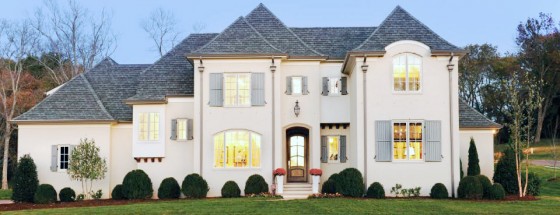
The Preserve is our newest community located just minutes from Barksdale Air Force Base. The Austrian artillery had breech-loading rifled guns which were superior to the Prussian muzzle-loading smooth bore cannon. New Krupp breech-loading cannons were being slowly introduced by the Prussians, but not in numbers large enough to influence outcomes.
Austro-Prussian War
Despite the Austrian advantage in the quality of their artillery equipment, other limitations prevented these from being effectively used. Austria responded with a mobilization of its Southern Army on the Italian border on 21 April. Italy called for a general mobilization on 26 April and Austria ordered its own general mobilization the next day.

Superior Prussian organization and élan decided the battle against Austrian numerical superiority, and the victory was near total, with Austrian battle deaths nearly seven times the Prussian figure. In order to prevent "unnecessary bitterness of feeling or desire for revenge" and forestall intervention by France or Russia, Bismarck pushed King William I of Prussia to make peace with the Austrians rapidly, rather than continue the war in hopes of further gains. The Austrians accepted mediation from France's Napoleon III. The Peace of Prague on 23 August 1866 resulted in the dissolution of the German Confederation, Prussian annexation of four of Austria’s former allies, and the permanent exclusion of Austria from German affairs.
There are many interpretations of Otto von Bismarck's behaviour before the Austrian-Prussian war, which concentrate mainly on the fact that he had a master plan that resulted in this war, the North German Confederation and the unification of Germany. Bismarck maintained that he orchestrated the conflict in order to bring about the North German Confederation, the Franco-Prussian War and the eventual unification of Germany. Southern Home Builders, Inc. is a residential home builder and neighborhood developer in the Shreveport/Bossier area. They design and construct homes and, also, manage communities to preserve the value. Our latest neighborhood is only a hop, skip, and a jump away from BossierÆs new hike and bike trails, the Red River Nature Preserve, and Parkway High school. The Preserve provides a network of walking trails alongside the neighborhoodÆs small lakes that weave together a system of green spaces and play areas.

A recent storm knocked the pillars off my back porch and into my wall causing damage, because the pillars were installed improperly. Multiple electrical problems, were it is almost impossible to change the wires out without ripping the walls apart. Due to the electricians they used drilling holes in the supporting walls 2x4s and pushing wires they them. The gas value to the fire place was only used a few times before it started leaking and had to be capped off by my gas company. Southern Home Builders, Inc. is a home builder in the Shreveport/Bossier region and is currently building in Legacy, Tuscany Villas, Tuscany Crossing, Riverbrooke, The Preserve and New Castle Pines. With Sollevare Homes, you have the option of selecting from a remarkable collection of exquisite building plans, or you may collaborate with our expert team to create the home you have always longed for.
Twelve Oaks, a master planned community located on 400 acres in Southeast Shreveport. Conveniently located near the Inner Loop 3132, residents can enjoy all the benefits of suburban living with quick access to I-49, downtown Shreveport, and other major destination points. The Twelve Oaks lifestyle is serene and polished with parks for kids, community pool and club house, and even a fishing area for the outdoors enthusiast. Legacy is a 650 acre master planned community located in North Bossier, an area experiencing robust growth.
The railway system of Prussia was more extensively developed than that within Austria. Railways made it possible to supply larger numbers of troops than hitherto and allowed the rapid movement of troops within friendly territory. The more efficient Prussian rail network allowed the Prussian army to concentrate more rapidly than the Austrians. The Estates provide the perfect opportunity to build the custom home of your dreams. This exclusive neighborhood within The Preserve offers homesites ready to build one of the exceptional floor plans we have designed for you.
You don't need to consent as a condition of buying any property, goods or services.


No comments:
Post a Comment